Embroidery on stretchy fabrics
Stretchy fabric moves under the needle, so logos pucker or distort. Use a cut-away stabilizer, hoop the fabric without stretching it, choose lighter designs with less dense areas, and test on the same garment before a run.
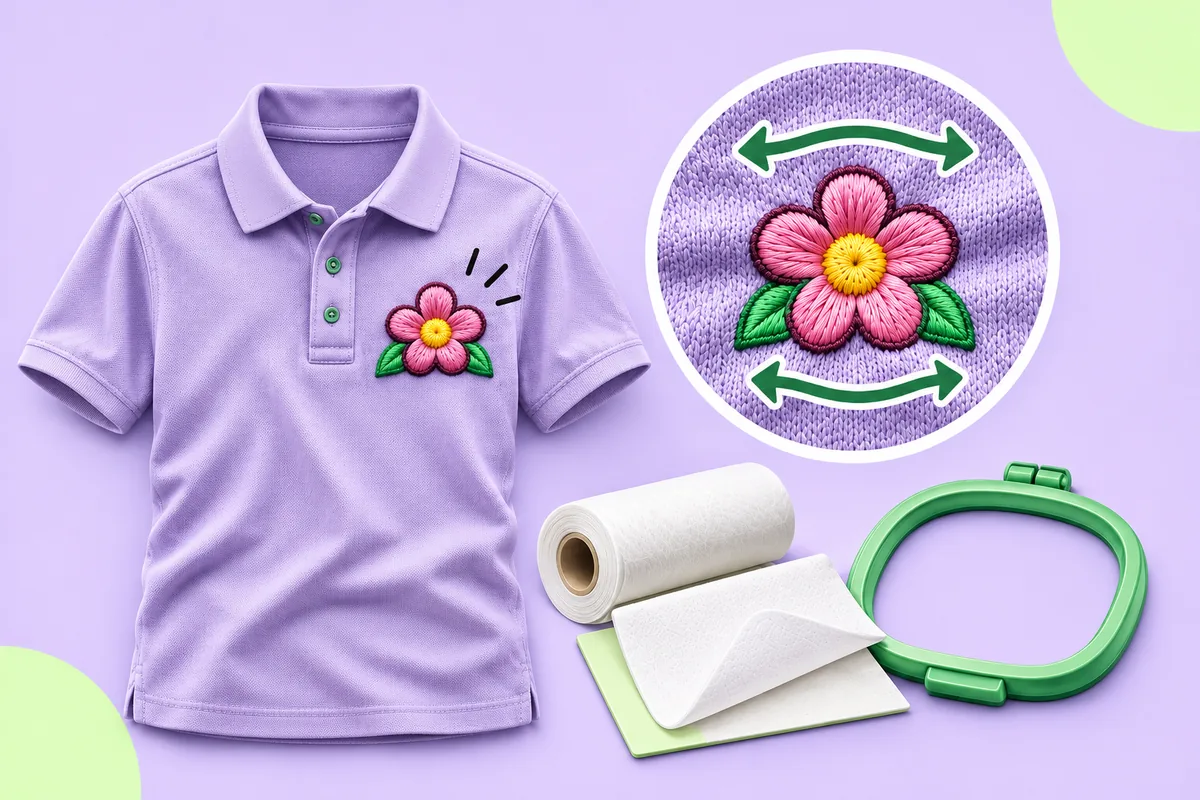
A design that embroiders cleanly on stiff cotton may develop ripples or distortions when applied to a polo shirt or a knitted fabric. Stretchy fabric shifts under the needle, and the stitches end up locking that movement in place. Here is how to deal with it.
Why stretch causes trouble
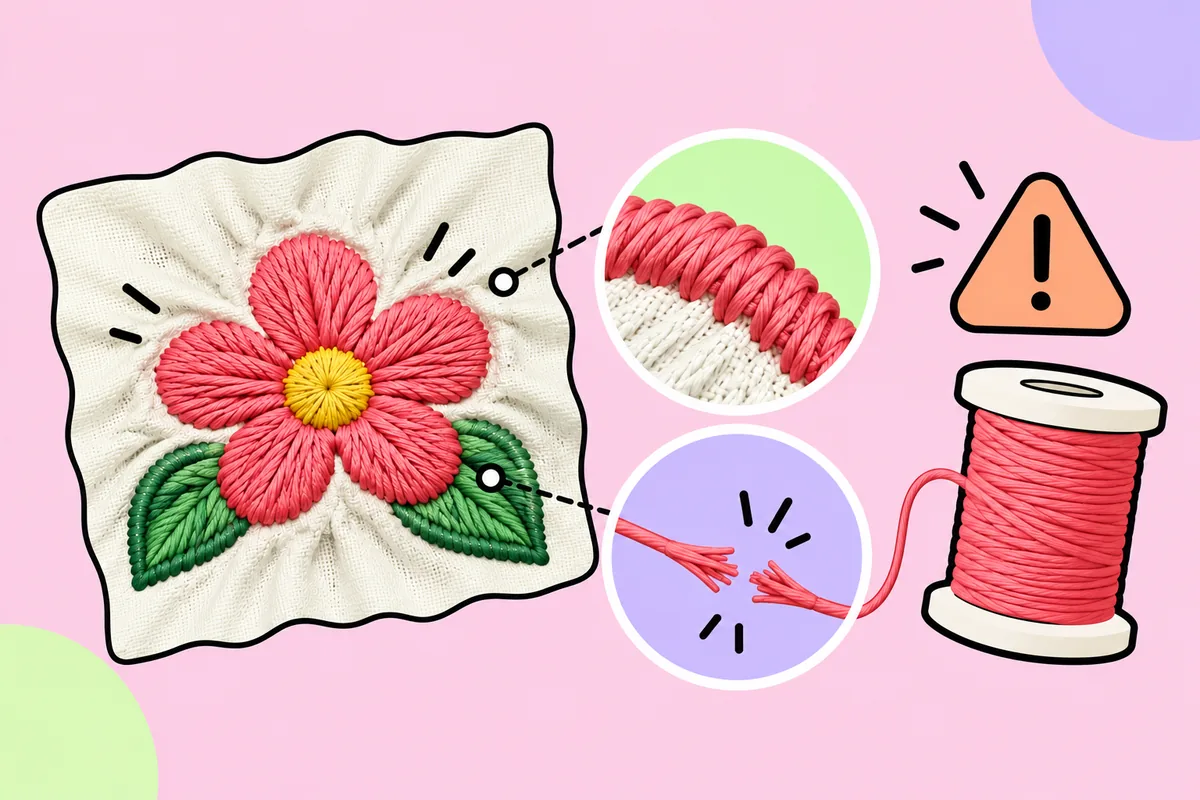
Embroidery creates a rigid structure stitched onto a flexible base. During the process, the fabric is held taut within a hoop. Once removed, it regains its original flexibility. If the stitches were made while the fabric was stretched, the fabric will return to its natural shape, causing puckering or ripples around the design.
Three problems occur most frequently:
- Puckering: ripples around the logo.
- Distortion: circles become ovals and straight lines bend.
- Gaps: outlines no longer meet the fills they surround.
Start with stabilizer
Stabilizer matters more on stretch than on any other fabric. It is the layer under the garment that holds it still while the needle works.
- A cut-away stabilizer stays in the garment and provides permanent support. It is the usual choice for knits, because the fabric would keep moving without it.
- A tear-away stabilizer is removed after sewing. It is fine for firm fabrics but often too weak for stretch.
- A water-soluble topping on the surface helps on textured knits, where stitches would otherwise sink in.
If you are not sure, use cut-away for stretchy material.
Hooping without stretching
Hooping is where many problems start. Pull the garment tight and it will relax later, pulling the design out of shape.
- Lay the fabric flat in the hoop without tugging it.
- Keep the grain straight so the weave is not skewed.
- Do not use so much force that the fabric shows marks.
- Keep the hoop as close in size to the design as practical, so there is less loose fabric to move.
Choose designs that suit stretch
Some artwork copes better than others.
- Simple, bold shapes hold up better than fine detail. See how to prepare a logo for embroidery for general advice on simplifying artwork.
- Light density keeps the design flexible. A dense logo on a thin knit acts like a stiff patch and drags the fabric.
- Thin lines and tiny text are the first things to distort. Read Minimum text size in embroidery before using small lettering on a knit.
- Large solid fills can make the garment stiff and wavy. Where possible, break them into lighter areas or use a different stitch type, as explained in Satin stitch vs fill stitch.
Adjust the file, not only the setup
The file affects how well a design survives stretch.
- Stronger underlay gives stitches a firmer base. See Underlay stitches explained.
- Extra pull compensation can offset the way knits shrink a shape. See Pull compensation in embroidery.
- Fewer stitches overall means less force on the fabric.
When converting automatically, the software will not know your garment is stretchy. You may need to lighten the design or adjust underlay yourself.
Needle and thread choices
The choice of needle affects how cleanly it passes through a knitted fabric. A needle with a rounded tip is designed to slide between the fibers of the knit rather than cutting them, which helps prevent the formation of small holes. Check which type suits your specific material and machine. Thread tension also plays a role: if the tension is too high, it pulls the fabric inward and causes puckering.
Fixing problems after sewing
A slight pucker can sometimes be smoothed out by gently pressing the fabric on the reverse side, away from the seams. Significant distortion usually indicates that the design or setup needs to be adjusted, rather than meaning the garment is beyond saving. Think of your first sample as merely a starting point.
A simple checklist
- Use cut-away stabilizer.
- Hoop flat, without stretching.
- Choose a simple, lighter design.
- Strengthen underlay and check compensation.
- Sew a sample on the same garment type.
Automatic results can need editing, so always test-sew on a scrap of similar fabric before a real run.
Where to start
To see how your logo turns into stitches, upload it to the converter on this site. Look at the preview for dense areas and fine details, simplify those if you are sewing on stretch, and then sew a sample on the real garment.
FAQ
What stabilizer should I use on stretchy fabric?
Cut-away stabilizer is the usual choice, because it stays in the garment and keeps supporting the fabric after sewing.
Why does my logo pucker on a polo?
Fabric stretched in the hoop relaxes after sewing and ripples around the stitches. Hooping flat, using cut-away and choosing a lighter design all help.
Should I use a lighter design on knits?
Yes. Dense designs act like a stiff patch on a flexible garment and drag the fabric.
Can I fix puckering after sewing?
Light puckering sometimes eases with careful pressing from the back. Heavy distortion usually means the setup or file needs changing.