Polyester vs rayon embroidery thread
Polyester is the usual choice for workwear, frequent washing and outdoor items because it copes with heavy use; rayon gives a softer, glossier look for decorative pieces that get careful care. Thread type is not stored in the file.
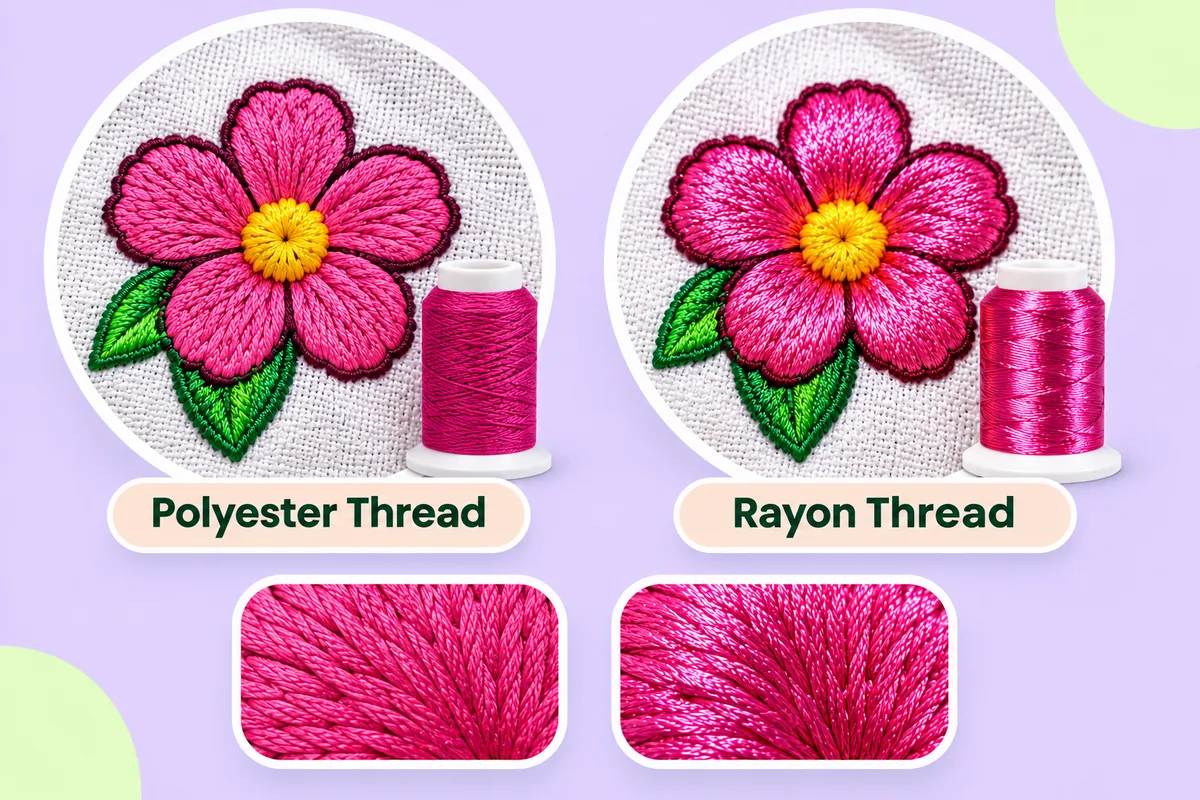
Thread is the visible component of any embroidered logo, yet it is often the last element to be chosen. The type of thread selected influences the sheen, durability, wash resistance, and even the overall quality of the finished embroidery. Here are the common options and the situations each one suits.
Polyester thread
Polyester is a synthetic thread known for strength and durability.
- Strong: it resists breaking, which helps on high-speed machines.
- Colourfast: colours tend to stay stable through repeated washing and sun.
- Tolerant of harsh care: it copes with hot washes and many cleaning products.
- Sheen: it has a clean, bright look.
Polyester is the usual choice for uniforms, workwear, sportswear and anything washed often.
Rayon thread
Rayon is made from regenerated cellulose and has a very smooth, glossy finish.
- High shine: it looks rich and silky.
- Soft: it feels pleasant and sews smoothly.
- Less durable: it can weaken with harsh washing or bleach.
- Colour: it has a wide range of vivid shades.
Rayon suits decorative items, fashion pieces and things that are washed gently.
Choosing between them
- Work uniforms and regular washing: polyester.
- Bright decorative pieces with careful care: rayon.
- Outdoor items in sun: polyester.
- Soft, glossy look is the priority: rayon.
Many businesses default to polyester because it is more forgiving of heavy use.
Other types you may see
Metallic thread has a glittering look. It is more fragile, breaks more easily and often needs slower sewing and a different needle. Use it for small accents, not whole designs.
Cotton thread has a matte, natural look. It is less common for machine logo work and can leave lint, but suits a traditional appearance.
Specialty threads, such as glow or variegated, are available for particular effects. Test them first, because they can behave differently from standard thread.
Thread weight
Thread comes in different thicknesses. Thicker thread covers more and looks bolder. Thinner thread allows finer detail. This connects directly to small text and fine lines. If you need small lettering, see Minimum text size in embroidery, and for fine strokes, see Thin lines and outlines in logos. A thread that is too heavy for the design fills in small shapes.
Does thread affect the file?
Yes, a little. The file stores stitch positions and colour stops, not thread type. But the right settings depend on the thread:
- Density may need adjusting for thicker or thinner thread.
- Underlay and pull behave differently with different threads. See Underlay stitches explained and Pull compensation in embroidery.
- Fragile threads need slower sewing and gentler designs.
Matching colours
On-screen colours rarely match thread exactly. Use a physical thread chart from your supplier and match against it, not against a monitor. When you send a file to a digitizer or machine operator, include a clear colour list. See Embroidery logo colours: how many?.
Fabric and thread together
Thread should suit the fabric. A heavy, dense design in strong thread on a delicate fabric can tear or pucker it. On stretch, thread choice interacts with stabilizer and tension. See Embroidery on stretchy fabrics.
Care instructions
If the item will be washed often, say so before choosing thread. If you are selling the product, give simple care guidance, such as washing inside out and avoiding bleach, to protect the embroidery.
Test first
Thread behaves differently on every combination of machine, needle and fabric. Sew a sample with the exact thread you plan to use, then wash it once to see how it holds. Automatic results can need editing, so always test-sew on a scrap of similar fabric before a real run.
Where to start
Pick the thread based on how the item will be used, then prepare your design. Upload your logo to the converter on this site, check the colour list in the preview, and match each colour to a real thread chart.
FAQ
Is polyester or rayon better for logos?
Polyester suits uniforms and frequent washing. Rayon gives a softer, glossier look for gently washed items.
Does thread type change the embroidery file?
The file does not store thread type, but the right density and settings can change with thicker or thinner thread.
Why is metallic thread harder to sew?
It is more fragile and breaks more easily, so it often needs slower sewing and a suitable needle.
How do I match thread colours?
Use a physical thread chart from your supplier rather than a screen, and send a clear colour list with the file.